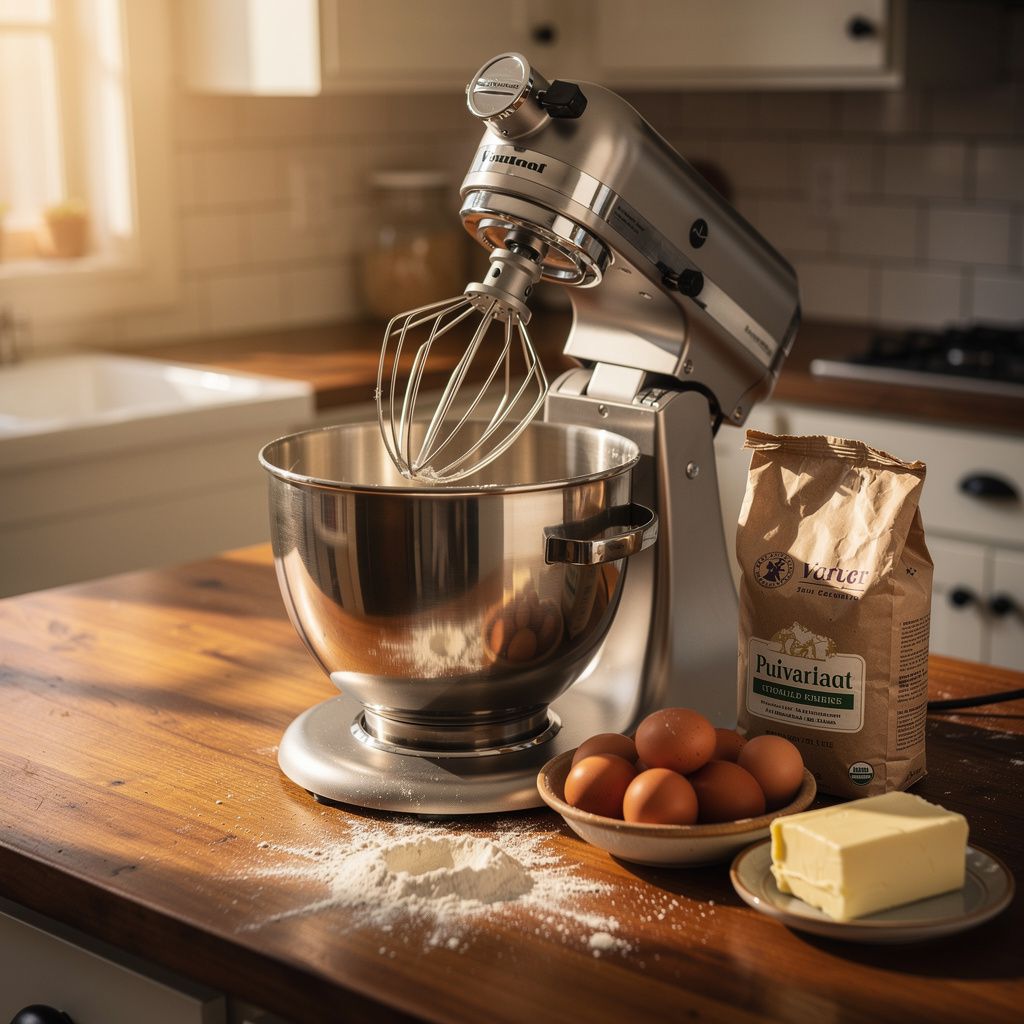
A stand mixer is a significant purchase — quality models last 20+ years. The right one depends on how much you bake, what you bake, and what attachments you plan to use. This guide cuts through the specs and marketing to help you choose the right machine.
Tilt-Head vs Bowl-Lift: The First Decision
Every stand mixer falls into one of two design categories, and they’re meaningfully different.
Tilt-Head
The mixer head tilts back on a hinge to give you access to the bowl. You lower the head to engage the attachment.
Pros:
- Easier bowl access — tilt back and add ingredients without removing the bowl
- More compact profile — shorter overall height
- Lower starting price
Cons:
- Head can wobble at high speed with heavy dough loads
- Less stable for stiff batters and bread dough
- Bowl removes by twisting from the bottom — slightly less convenient than bowl-lift
Best for: Cookie dough, cake batters, whipped cream, meringues, and moderate bread baking. Most home bakers.
Bowl-Lift
The bowl is raised and lowered by a lever mechanism rather than tilting the head.
Pros:
- More stable and rigid construction — handles stiff bread doughs without head wobble
- Better for heavy commercial loads
- More secure bowl locking
Cons:
- Taller footprint — may not fit under low cabinets
- Adding ingredients requires lowering the bowl or using the side of the bowl
- More expensive starting price
Best for: Serious bread bakers, high-volume baking, and anyone making stiff doughs regularly. The KitchenAid Professional series is bowl-lift.
For most home bakers: Tilt-head is the right choice. The bowl-lift design’s advantages are most apparent with weekly heavy bread dough — for cookies, cakes, and occasional bread, tilt-head handles everything well.
Motor Power: What Wattage Actually Means
Stand mixer wattage is frequently misrepresented — manufacturers list input wattage (power consumed), not output wattage (power delivered to the dough). A 300W output motor might be marketed as a 500W machine.
What Wattage Handles What
| Wattage (Input) | Practical Capability |
|---|---|
| 250–300W | Light duty: whipped cream, thin batters, meringue |
| 300–400W | Medium duty: cookie dough, cake batter, occasional bread |
| 500–600W | Standard home use: most recipes including dense bread dough |
| 800W+ | Heavy duty: stiff artisan bread doughs, high volume |
The real test: Can the motor handle two batches of bread dough back to back without overheating? Budget mixers often can’t. The KitchenAid Artisan (325W) handles typical home baking well but will strain with very stiff doughs. The Professional 600 (575W) handles virtually anything a home baker needs.
Warning sign: If you hear the motor slowing or struggling under load, the dough is too stiff for your machine. This causes premature wear. Either reduce batch size or upgrade.
Bowl Size Guide
| Bowl Size | Batch Capacity | Best For |
|---|---|---|
| 4.5 quart | ~6 dozen cookies / 2 lbs bread dough | Couples and small households, light baking |
| 5 quart | ~7 dozen cookies / 2.5 lbs bread dough | Most home bakers — standard KitchenAid Artisan size |
| 6 quart | ~10 dozen cookies / 3+ lbs bread dough | Frequent bakers, families, holiday baking |
| 7 quart+ | Commercial-scale batches | Only if you’re regularly baking for large groups |
The sweet spot for most home bakers: 5 quart. It handles full recipes from major cookbooks without splitting, and the bowl isn’t so large that small batches (a single cake) lose contact with the beater.
One underrated tip: a secondary bowl is worth buying for any model you commit to. When a recipe calls for whipping egg whites and then folding in a batter, having two bowls saves the step of washing and drying before the next use. KitchenAid sells extra bowls separately — they’re expensive at retail, but frequently discounted.
Attachments: Essential vs Nice-to-Have
Essential (Come with the Mixer)
Every quality stand mixer includes three attachments:
Flat beater (paddle): The workhorse. Use for cookies, cake batter, mashed potatoes, meatloaf, anything that needs mixing without incorporating too much air.
Wire whip: For egg whites, whipped cream, mayonnaise, and any recipe requiring aeration.
Dough hook: Spiral or C-shaped, for bread dough. Kneads dough by stretching it against the bowl.
If a mixer doesn’t include all three, skip it.
Nice-to-Have Attachments (Purchased Separately)
Pasta roller/cutter set: The most popular accessory. Makes fresh pasta from flour and eggs with minimal effort. If you enjoy pasta, it pays for itself in a few uses versus buying a standalone pasta machine. KitchenAid’s pasta roller set is excellent.
Meat grinder: Grinds fresh meat for burgers, sausage, and ground meat dishes. Control over grind coarseness and ingredient quality makes home-ground meat genuinely superior. Worth it if you make burgers or meatballs frequently.
Sausage stuffer: Pairs with the meat grinder. Requires some practice but opens up homemade sausage-making.
Ice cream maker bowl: Freeze the bowl insert, add the ice cream maker attachment, and churn fresh ice cream. Results are excellent. The bowl requires 24+ hours in the freezer before use.
Flex edge beater: A paddle attachment with a silicone edge that scrapes the bowl sides while mixing. Reduces the need to stop and scrape manually. Surprisingly useful for thick batters.
Not Worth It
Citrus juicer, food grinder (for vegetables), spiralizer — these exist as KitchenAid attachments but perform mediocrely compared to dedicated tools. The brand attachment ecosystem is a feature worth valuing, but don’t buy every attachment available.
KitchenAid vs Alternatives
KitchenAid dominates the home stand mixer market for good reason — their machines are reliable, the attachment ecosystem is mature, and a KitchenAid from 1990 still accepts the same attachments sold today. That longevity matters.
KitchenAid Lineup
| Model | Design | Wattage | Bowl | Price |
|---|---|---|---|---|
| Classic Plus (4.5 qt) | Tilt-head | 275W | 4.5 qt | ~$280 |
| Artisan (5 qt) | Tilt-head | 325W | 5 qt | ~$350–$500 |
| Professional 600 | Bowl-lift | 575W | 6 qt | ~$400–$550 |
| Commercial 8 | Bowl-lift | 500W | 8 qt | ~$600+ |
The Artisan is the standard recommendation. It handles the vast majority of home baking tasks, the color options are numerous, and it’s often discounted 20–30% during sales events. The Professional 600 is worth the upgrade if you bake bread weekly.
Alternatives Worth Considering
Ankarsrum Original (Swedish): A completely different design — the bowl rotates rather than the head. Exceptional for bread dough. The 600W motor is powerful and runs continuously without heat buildup. Expensive ($700+) but beloved by serious bread bakers. The learning curve is real — it works differently from every other stand mixer.
Bosch Universal Plus: The preferred mixer of many bread bakers. Extremely powerful motor, large capacity, and handles stiff doughs with ease. Less stylish than KitchenAid, smaller attachment ecosystem, but the dough-handling performance is excellent. Around $400–$500.
Cuisinart Precision Master: A budget alternative to KitchenAid at $200–$250. Adequate for occasional baking. Shorter expected lifespan than KitchenAid, smaller attachment ecosystem. Acceptable for light use.
The Bottom Line
For the majority of home bakers — cookies, cakes, occasional bread, whipped cream — the KitchenAid Artisan 5-quart tilt-head is the right choice. Buy it on sale (Black Friday and Prime Day routinely see 30% discounts), add a flex edge beater, and consider a second bowl.
If you bake bread at least weekly, upgrade to the KitchenAid Professional 600 or consider the Bosch Universal Plus — both handle stiff doughs without the motor strain that limits the Artisan.
Avoid the entry-level Classic unless you’re genuinely a light user — the price difference versus the Artisan is rarely large enough to justify the wattage and bowl size reduction.