Good baking results come from good technique and good equipment working together. You don’t need to spend a fortune — but buying cheap versions of critical tools costs more in failed batches and frustration than buying quality once. This checklist tells you what you actually need, what order to buy things, and where the quality of the tool genuinely matters.
Level 1: Must-Have Basics (Start Here)
These tools cover 80% of all baking recipes. If you’re setting up from scratch, start with this list before buying anything else.
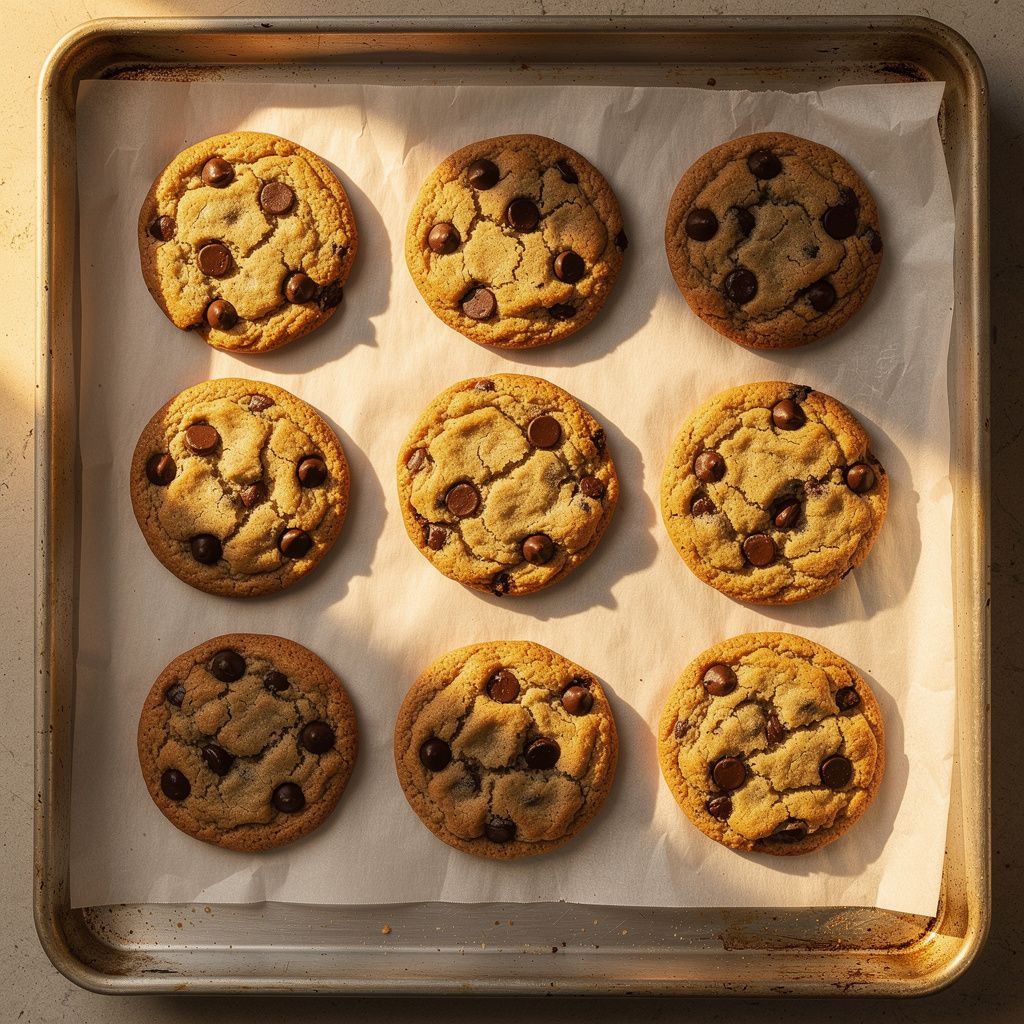
Rimmed Half Sheet Pans (18x13 inch)
The most versatile baking vessel in the kitchen. Sheet pans go far beyond cookies — roasted vegetables, sheet pan dinners, meringues, sponge cake rolls, and more. Thin, warped sheet pans are the source of uneven baking and burnt edges.
What to buy: Nordic Ware Natural Aluminum or USA Pan half sheets. These are made from heavier-gauge aluminum that won’t warp at high temperatures. Two pans minimum, three is better.
Where to save: Generic restaurant-supply half sheet pans ($10–$15) outperform branded bakeware sold at retail for three times the price. Heavy aluminum is the spec that matters.
Mixing Bowls (Set of 3–4)
You need multiple sizes — a large bowl for batters and doughs, medium for mixing components, small for prep. Stainless steel is preferred: dishwasher-safe, durable, and stable on the counter (with a damp towel underneath).
What to buy: OXO Good Grips stainless steel 3-piece set, or the Vollrath commercial stainless set. Both have non-slip bottoms and pour spouts.
Measuring Cups and Spoons
Dry measuring cups (1 cup, 1/2 cup, 1/3 cup, 1/4 cup): Fill and level — don’t pack unless the recipe specifically says to. OXO and Cuisipro stainless versions are durable and accurate.
Liquid measuring cups: A 2-cup Pyrex glass measuring cup is a kitchen standard. The angled-design OXO measuring cups allow reading from above — highly useful.
Measuring spoons: Stainless steel, 1 tablespoon through 1/4 teaspoon. Narrow-profile spoons that fit inside spice jars are a quality-of-life upgrade.
Kitchen Scale
If you bake bread or pastry regularly, a kitchen scale transforms your results. Measuring flour by volume introduces 10–20% variance depending on how you scoop — by weight, flour is flour. Most European and professional recipes give weights, not volumes.
What to buy: OXO Good Grips 11-pound scale (~$50) or the Escali Primo ($25). Both are accurate and easy to clean.
This is not optional for bread and pastry. The single most common reason home bread fails is inconsistent flour measurement.
Cooling Racks
Baked goods need air circulation on all sides to cool properly. Setting hot items directly on a counter traps steam and makes the bottom soggy. Two wire racks are sufficient; three is better.
What to buy: Checkered Chef or USA Pan oven-safe racks. Get racks that also fit inside your sheet pans for roasting and glazing.
Parchment Paper
Pre-cut half sheet parchment (fits 18x13 sheet pans perfectly) is vastly more convenient than rolling parchment. Silpat silicone mats are an alternative — reusable, but parchment is easier for cookies that need to slide off cleanly.
Silicone or Rubber Spatulas
Multiple spatulas are essential — you’ll use them constantly. Heat-resistant silicone handles oven-temperature mixing. A set of sizes (large, medium, small) covers all uses.
What to buy: GIR or OXO silicone spatulas. Avoid hollow-handled spatulas — they trap moisture and grow mold.
Level 2: Intermediate Tools (Add These Next)
Once you’ve mastered the basics, these tools expand what’s possible and make existing recipes significantly easier.
Stand Mixer
A stand mixer handles everything from cookie dough to whipped cream to bread kneading without effort. The KitchenAid Artisan (5-quart tilt-head) is the standard recommendation — reliable, durable, and the attachment ecosystem is mature. (See our separate stand mixer guide for full details on model selection.)
Digital Instant-Read Thermometer
The single most reliable tool for knowing when things are done. Check internal temperature of bread (190–200°F for lean breads), cake layers (don’t trust the toothpick method when precision matters), caramel (hard crack stage = 300°F), and candy.
What to buy: ThermoWorks Thermapen ONE ($105) or ThermoWorks ThermoPop ($35). The Thermapen is the fastest and most accurate instant-read thermometer available. The ThermoPop is 80% of the performance for 35% of the price.
Bench Scraper
A flat metal scraper with a handle. Uses: divide dough, lift pastry off work surfaces, clean the bench, shape bread loaves, transfer chopped ingredients from board to pan. Once you own one, you’ll wonder how you baked without it.
What to buy: Any stainless steel bench scraper with a comfortable handle — Dexter-Russell or OXO. Under $15.
Dough Scraper (Bowl Scraper)
The flexible plastic version of a bench scraper. Conforms to the curve of bowls and is ideal for cleaning batter from mixing bowls. Different from a bench scraper — you want both.
Pastry Brush
Egg wash for pies, butter for croissants, brushing glaze onto cakes. Silicone brushes are dishwasher-safe and don’t shed bristles; natural bristle brushes are better for delicate glazes.
Offset Spatula (Small and Medium)
An angled spatula blade for frosting cakes, spreading batter evenly in pans, and lifting cookies. The offset angle keeps your hand clear of the surface. An 8-inch offset for cakes and a 4-inch small offset for detail work covers everything.
What to buy: Ateco offset spatulas. The standard for pastry professionals and available for under $15 each.
Oven Thermometer
Domestic ovens are frequently miscalibrated — many run 25–50°F off the set temperature. An inexpensive oven thermometer confirms your oven’s actual temperature and explains why recipes come out differently than expected.
What to buy: Cooper-Atkins or CDN oven thermometer (~$10). Leave it in the oven and check it every time you preheat.
Level 3: Advanced Tools (For Serious Bakers)
These tools are significant investments justified by frequent, serious use.
Proofing Basket (Banneton)
A cane basket used for final proofing of artisan bread loaves. Absorbs moisture from the dough surface, creates a dry skin that helps the crust form, and imprints a decorative spiral pattern. Round bannetons (9-inch) for boules, oval for batards.
What to buy: SUGUS HOUSE or WERTIOO rattan bannetons. Requires occasional maintenance (flour and dry storage) to prevent mold.
Pastry Bags and Tips
Essential for decorative cake frosting, piping choux pastry (eclairs, profiteroles), macarons, and cream fillings. Reusable silicone bags are convenient; disposable bags are cleaner for high-volume work.
A starter tip set (Ateco 55-piece) covers every basic shape plus many decorative options.
Bench/Pastry Mat (Silicone)
A silicone mat with measurement guides for rolling dough. Stays in place on the counter without additional flour, marks guide circles for pie crust sizing, and cleans completely flat.
Digital Scale with 0.1g Resolution
For bread baking where you’re measuring yeast, salt, and levain at precise percentages, a standard 1g-resolution scale isn’t accurate enough for small measurements. A 0.1g-resolution jewelry or coffee scale for small ingredient weighing.
Where to Save vs Where to Invest
Save Money On
- Sheet pans: Commercial aluminum pans from a restaurant supply store or Amazon are identical to premium branded versions for a third of the price.
- Measuring cups: Accuracy matters more than brand. OXO basics over fancy branded sets.
- Cooling racks: Any heavy stainless wire rack works. Don’t pay premium prices.
- Parchment paper: Buy in bulk. Generic restaurant-supply parchment is identical to branded.
Invest In
- Kitchen scale: A $25 scale introduces error. The $50 OXO scale is accurate and lasts a decade.
- Instant-read thermometer: A $10 thermometer reads slowly and inaccurately. The ThermoWorks ThermoPop ($35) and Thermapen ($105) are genuinely faster and more accurate, and they’re used for everything — candy, bread, meat, frying.
- Sheet pans (gauge matters): Not expensive to buy well — the Nordic Ware half sheets are under $25. But cheap thin pans warp and cause uneven baking, costing more in failed batches.
- Stand mixer: Buy once, use for decades. The KitchenAid Artisan on sale ($250–$300) is worth the investment over a $100 budget mixer that burns out.
Recommended Brands by Item
| Tool | Recommended Brand |
|---|---|
| Sheet pans | Nordic Ware, USA Pan |
| Mixing bowls | OXO, Vollrath |
| Kitchen scale | OXO, Escali |
| Instant-read thermometer | ThermoWorks |
| Stand mixer | KitchenAid |
| Cooling racks | Checkered Chef, USA Pan |
| Bench scraper | Dexter-Russell, OXO |
| Offset spatula | Ateco |
| Pastry bags | Wilton (reusable), Decorator Preferred (disposable) |
| Banneton | SUGUS HOUSE |
The Bottom Line
The Level 1 list covers the vast majority of home baking. A kitchen scale, a reliable oven thermometer, and a heavy sheet pan will improve your results more than any specialty gadget.
Add Level 2 tools as you find gaps in what you can accomplish. A stand mixer and instant-read thermometer are the two Level 2 items with the widest payoff across the most recipe types.
Level 3 is for bakers who’ve gone deep — if you’re making sourdough weekly or decorating layered cakes, those tools earn their place. Otherwise, they’ll collect dust.